
From Mountain to Market: A Story of Stone Extraction and Heavy Machinery
The morning sun rises over a rugged mountain range. Dust lingers in the cool air, and the echo of distant engines signals the start of another day in the quarry. Dozens of workers gather near the pit, where massive machines wait like giants ready for battle. The goal is clear: to carve valuable stone from the mountain and deliver it to the world. But the journey is long, and every step depends on the strength and precision of the machines.
1. Opening the Quarry ??? Clearing and Preparation
Before the first stone can be taken, the ground must be prepared. Bulldozers rumble forward, pushing soil and loose rock aside.
Caterpillar D10 dozers are often the first to arrive, famous for their raw pushing power and unmatched durability in rugged terrain. They level surfaces and open paths where trucks and loaders will operate.
Komatsu D375A plays a similar role but is preferred in some regions for its smoother hydraulic control and lower operating costs over time.
Hyundai Dozers are newer to the scene, but their growing presence in Asian and Middle Eastern quarries shows they can compete, offering a balance of affordability and modern electronic controls.
At this stage, the mountain begins to change shape, its natural surface transformed into working benches and haul roads.
2. Breaking the Rock ??? Precision Cutting and Drilling
Contrary to what many imagine, not all quarries rely purely on blasting. In ornamental stone quarries???granite, marble, limestone???the goal is to cut massive, clean blocks without fractures.
Diamond wire saws snake through solid rock, slicing it with surgical precision. Supporting these saws are drilling rigs, which create holes for guiding the wires.
In larger, harder rock sites where blasting is required, machines prepare the ground:
Caterpillar MD series drills bore deep holes into the bench.
Komatsu D475 dozers then clear debris and prepare the site for controlled explosions.
Hyundai drill rigs, though newer, are gaining recognition for their fuel efficiency and user-friendly operation in mid-size quarries.
This stage demands accuracy, because one wrong move can ruin an entire block of valuable stone.
3. Loading and Hauling ??? The Workhorses of the Quarry
Once stone is cut or loosened, the heavy lifting begins. Massive blocks or broken rock must be loaded onto trucks and moved out of the pit.
Wheel Loaders:
Caterpillar 988K is a legend, used globally for decades. Its power and endurance make it a top choice for granite quarries in North America.
Komatsu WA600 rivals it with smoother hydraulics and lower fuel burn, often chosen in African and Asian markets where parts availability makes a difference.
Hyundai HL980A loaders represent the new player???modern cabins, efficient engines, and a price tag that attracts quarry owners looking to cut costs without sacrificing capacity.
Excavators:
Caterpillar 390F L handles oversized boulders and tough digging.
Komatsu PC1250 shines in iron ore and large limestone quarries, known for its balance between digging force and reliability.
Hyundai HX900L, though younger in reputation, is stepping into the same class, offering intelligent electronic systems and strong performance at a lower acquisition cost.
Haul Trucks:
Caterpillar 777 is iconic, roaring through dusty roads with unmatched dependability.
Komatsu HD785 stands shoulder-to-shoulder, praised for its payload capacity and toughness.
Hyundai articulated dump trucks (A-Series) are not yet as globally dominant, but they are making inroads in markets where initial investment costs matter most.
4. Processing and Beyond ??? From Quarry to Customer
Once delivered to the crusher or block yard, the stone begins its second life???turned into aggregates for highways, slabs for luxury hotels, or tiles for kitchens around the world. Behind each finished piece is the story of machines that shaped, moved, and carried it from the mountain.
Caterpillar stands as the heritage brand, trusted where uptime is non-negotiable.
Komatsu offers the smart alternative, combining reliability with cost efficiency.
Hyundai is the challenger, a rising player rewriting the rules by providing high-tech features at competitive prices.
Closing Scene
As dusk settles, the machines shut down one by one. Workers leave the quarry, and silence returns to the valley. Yet the footprints of Caterpillar, Komatsu, and Hyundai remain carved into the stone walls, a testimony to the battle between man, machine, and mountain. Tomorrow, the giants will wake again, and the story will continue.
A Story of Machines, Power, and Finance
Prologue: Sparks on the Horizon
Once upon a time in the bustling age of transition???around 2025???the heavy equipment world began to hum with a new rhythm. The days of roaring diesel engines were slowly giving way to a quieter, cleaner, yet no less powerful chorus: electrification.
It started with a pact???LG Energy Solution and Doosan Bobcat, hand in hand, working to develop standardized battery packs for compact construction machines. Alongside them, the RogueX2 loader, cab-free and autonomous, painted the picture of tomorrow???s job site.
But the tale doesn???t end there. The giants of industry???Komatsu and Caterpillar???stepped onto the stage with their own electrified chapters, while the global EV surge redrew financial landscapes.
Chapter One: Komatsu???Power That Travels
Komatsu realized that building electric machines is only half the battle; the real challenge is charging them where they work. Mining pits and construction zones often lie far from reliable grid access.
Enter the Mobile Megawatt Charging System, developed with Dimaag. This rugged, 4-wheel-drive charging truck carries a 295 kWh battery energy storage system and delivers up to 6 MW of charging power directly to machines on site. No more idle waiting for power???charging happens between shifts, keeping fleets moving.
At Bauma 2025, Komatsu unveiled three new electric mini excavators???the PC20E, PC26E, and PC33E. Each one is designed for quiet urban projects, reduced emissions, and easier maintenance. Their motors deliver strong torque and their run-time makes them competitive with diesel counterparts.
But Komatsu???s ambitions don???t stop small. Their $440 million sale of electric mining equipment to Barrick Mining in Pakistan demonstrates commercial trust in large-scale electrification.
To power these ambitions, Komatsu is scaling up its U.S. lithium-ion battery production capacity from 0.6 GWh to 2.6 GWh by 2026, a nearly fivefold increase, backed by a $65 million investment.
And geopolitics adds a twist: easing tariffs between the U.S. and China could save Komatsu $140 million per year, freeing capital to reinvest in electrification.
Komatsu???s story is clear: their electrification drive is not just about machines???it???s about creating a full power ecosystem.
Chapter Two: Caterpillar???Hybrid Minds and Autonomous Strength
While Komatsu builds chargers, Caterpillar is creating a system of systems???machines, energy storage, charging, and autonomy woven together.
At CES 2025, Caterpillar unveiled a suite of solutions: electric mini excavators, zero-emission loaders, and underground machines with onboard fast-charging packs. Alongside them were Caterpillar???s generators, inverters, telematics, and even hydrogen fuel cells???an ecosystem where machines and power infrastructure integrate seamlessly.
Their Cat 972 hybrid loader stands out: equipped with a diesel generator as a range extender, it offers the flexibility of electrification without waiting on large charging networks. This hybrid pathway helps bridge the transition for customers who can???t yet go fully electric.
Caterpillar is also pushing autonomy. Through a partnership with Luminar, Caterpillar is embedding advanced lidar sensors into its Cat Command system, enabling semi- and fully autonomous operation even in dusty mining environments. Autonomy not only reduces labor costs but also enhances safety???machines can work where humans can???t.
In short, Caterpillar isn???t just electrifying; it???s re-architecting the entire job site, where machines talk to each other, energy flows intelligently, and humans guide from afar.
Chapter Three: Finance and the EV Ripple Effect
Behind every machine and battery lies the lifeblood of progress finance.
The EV industry has shifted global capital flows dramatically:
Oil displacement: By 2024, EV adoption displaced over 1 million barrels of oil per day, directly impacting global energy markets.
Investor preference: Battery producers, EV makers, and mining firms supplying lithium, nickel, and cobalt have outperformed legacy automakers, drawing in billions in green finance.
Policy pressures: In the U.S., the removal of EV tax incentives could slow momentum, but Ford and others are doubling down with cheaper EV models and massive plant investments.
China???s dominance: With nearly half of its new cars electric by 2024, China???s financing model???state-backed loans, rapid infrastructure rollout, and aggressive manufacturing???keeps it in the global lead. Europe and the U.S. risk falling behind without similar capital mobilization. (ft)
For heavy equipment, the impact is profound:
Contractors now weigh long-term operating costs (electric = cheaper energy + lower maintenance) against upfront prices.
Investors see construction electrification as an extension of the EV boom, opening new markets for batteries, charging systems, and autonomy software.
Manufacturers like Komatsu and Caterpillar are treated not just as machinery firms, but as technology and energy companies???with stock valuations increasingly tied to their electrification roadmaps.
Epilogue: A New Industrial Story
The curtain falls on a construction site of tomorrow:
Bobcat???s RogueX2 roams cab-free, quietly reshaping the skyline.
Komatsu???s mobile megawatt charger rolls in, bringing power to the remotest corners of the earth.
Caterpillar???s hybrid and autonomous fleets work in harmony, guided by invisible networks of sensors and data.
And in the background, the global EV wave shifts money, policy, and markets???funding this electrified transformation.
This is not just machinery evolution. It is a financial and industrial revolution, where the engines of the past give way to the batteries of the future.
source :
LG Energy Solution & Doosan Bobcat to Develop Batteries for Construction Vehicles ??? Electrive, March 24, 2025
https://www.electrive.com/2025/03/24/lg-es-doosan-bobcat-to-develop-batteries-for-construction-vehicles
Doosan Bobcat Envisions The Future With Cab-Free, Electric, Autonomous RogueX2 Loader ??? Machinery Trader, January 2024
https://www.machinerytrader.com/blog/construction-equipment-news/2024/01/doosan-bobcat-envisions-the-future-with-cab-free-electric-autonomous-roguex2-loader
Komatsu and Proterra Announce Collaboration on Electric Construction Equipment ??? Komatsu Newsroom, January 2021
https://www.komatsu.jp/en/newsroom/2021/20210125
Komatsu to Develop Portable Battery Chargers for Electric Construction Equipment ??? Construction Equipment Guide, September 2023
https://www.constructionequipmentguide.com/komatsu-to-develop-portable-battery-chargers-for-electric-construction-equipment/62016
Caterpillar Showcases 100% Battery Electric 793 Large Mining Truck ??? Caterpillar Newsroom, December 2022
https://www.caterpillar.com/en/news/caterpillarNews/2022/793-battery-electric.html
Caterpillar Autonomous Solutions in Mining & Construction ??? Caterpillar Technology Overview, 2023
https://www.caterpillar.com/en/technology/autonomy.html
Global EV Outlook 2024 ??? International Energy Agency (IEA), May 2024
https://www.iea.org/reports/global-ev-outlook-2024
Komatsu GD955-7 vs Previous Models: The Evolution of Power and Precision in Motor Graders

The Rise of the GD955-7: Komatsu???s Grader Revolution
In the world of heavy equipment, every machine tells a story. A story of terrain conquered, roads shaped, and hours logged in harsh conditions. For decades, Komatsu???s lineup of motor graders has played a quiet but vital role in this narrative???especially in mining operations and road-building projects across the globe.
Machines like the GD825, GD675, and GD655 have carried the weight of tough jobs on their shoulders. They’ve cut paths through rock, leveled raw earth, and maintained haul roads day in and day out. But now, a new chapter has begun. Komatsu has introduced a new hero to this story???a machine not only built for the task but refined for the future: the GD955-7.
A Look Back: Komatsu’s Grading Legacy
Let???s go back in time.
The GD825-2: The Iron Veteran?
Back in its day, the Komatsu GD825-2 was a legend in mining. With nearly 310 horsepower and an operating weight of about 28 tons, it was powerful and rugged. It could handle large haul roads and tough surfaces with ease.
But even heroes age.
Its visibility was limited, requiring operators to rely more on guesswork than sight. The circle drive wore out fast, needing frequent servicing. Maintenance was manual, time-consuming, and costly. Still, it got the job done???and earned respect.
The GD675-6 & GD655-6: The City Specialists?
Meanwhile, on the other side of the battlefield, the GD675 and GD655 worked with precision in urban zones and mid-size projects.
The GD675 featured 221 horsepower and had better maneuverability than the GD825.
The GD655, slightly lighter at around 17 tons, was ideal for smaller roads, city grading, and utility work.
These models offered agility and fuel efficiency???but in mining applications or heavy-duty grading, they simply didn???t have the muscle or durability to compete.
They were like scouts???fast, nimble, and reliable???but not built for frontline combat in mining zones.
And Then Came the GD955-7???
In January 2024, Komatsu dropped the curtain on its GD955-7 motor grader???and the landscape shifted. This wasn’t just another model. It was a complete reinvention. A machine designed with power, precision, operator comfort, and smart maintenance in mind.
Imagine a grader with:
426 horsepower under the hood.
An operating weight over 47 tons???a full 50% heavier than the GD825.
A 20-foot blade option, with the productivity to match.
A cockpit that feels more like the control room of a modern aircraft than a construction machine.
And for the first time in Komatsu???s grader history???an automatic lubrication system and a bearing-type circle that doesn’t need constant shimming or wear adjustment. That???s 21% less downtime and thousands of dollars saved in the long run.
A Written Comparison: Past vs. Present
Let???s compare them not just with numbers???but with feeling.
The GD825-2 was the old-school bruiser. You could hear it coming before you saw it. It roared, it climbed, it fought every hill like it had something to prove. But it needed attention???frequent greasing, circle replacements, and a skilled operator who knew the machine???s moods.
The GD675 and GD655 were smoother, smarter???perfect for cities and sites where tight turns and fuel economy mattered. But when they were placed in mine roads filled with 100-ton haulers, they???d sweat. Their lighter frame and smaller blades weren???t built to match the brute force needed there.
Then came the GD955-7, and it didn???t shout???it whispered. Confident, composed. It didn???t need to prove anything. It was engineered to perform. With 360-degree KomVision cameras, you didn???t just operate it???you commanded it. The seat hugged you, the joysticks moved like extensions of your hand, and the blade did the hard work???quietly, precisely.
It was no longer about pushing through???it was about flowing with control.
Feature Comparison Chart
| Feature | GD655-6 | GD675-6 | GD825-2 | GD955-7 |
|---|---|---|---|---|
| Horsepower | 218 hp | 221 hp | ~310 hp | 426 hp |
| Operating Weight | ~17,000 kg | ~18,000 kg | ~28,000 kg | 47,320 kg |
| Blade Size | 14 ft | 14 ft | 16 ft | 18???20 ft |
| Circle Maintenance | Manual | Manual | Frequent | Self-lubricated |
| Visibility | Basic | Improved | Limited | 360?? KomVision |
| Ideal Use | City grading | Mid-size roads | Mine haul roads | Heavy mining & high-load grading |
Designed for the Operator, Built for the Future
One of the biggest upgrades in the GD955-7 isn???t just in steel and horsepower???it???s in how it treats the operator.
The heated and ventilated seat.
The reduced vibration design.
The redesigned cab with wide visibility and low-noise insulation.
The fast, intuitive joystick controls.
This is no longer just a tool???it???s a workplace.
It???s designed for long shifts, tough terrain, and demanding schedules???but without beating down the operator.
Final Word: Evolution with Purpose
The Komatsu GD955-7 doesn???t erase the legacy of the GD825, GD675, or GD655. It builds upon it???bringing the lessons of the past into a future that demands more: more power, more uptime, more comfort, and more precision.
This grader isn???t just stronger.
It???s smarter.
It???s quieter.
And it???s ready for whatever???s next.
Whether you’re managing a mining fleet or rebuilding infrastructure across tough terrain, the GD955-7 might just be the best investment you can make this decade.
Looking to upgrade your grader fleet or explore parts support for older models?
Stick around???our blog will keep bringing you the latest in equipment news, comparisons, and parts support for the machines that keep the world moving.
Crafting an Effective Heavy Equipment Maintenance Schedule and Avoiding Common Mistakes
1. Start with the Manufacturer???s Blueprint
Every piece of heavy equipment, whether a Komatsu WA600 loader or a CAT 336 excavator, is designed with specific tolerances and service expectations. OEM (Original Equipment Manufacturer) manuals provide precise instructions for service intervals, recommended fluids, calibration checks, and safety inspections. These documents are the engineering blueprint for keeping a machine operational for its expected lifecycle. Ignoring the manual and relying on ???industry habits??? can shorten component life and even void warranties.
For example, the CAT O&MM may suggest replacing hydraulic filters every 500 hours, but an operator pushing this to 800 to ???save time??? could end up replacing the entire hydraulic pump???a repair that costs 20 times more. Building your schedule around OEM recommendations gives you a benchmark to begin with, which you can later fine-tune based on real-world data.
2. Define Maintenance Types: Preventive, Predictive, and Reactive
Many fleet managers treat all maintenance tasks the same, which leads to confusion, inefficiency, and missed opportunities. A solid schedule classifies each task into three core categories:
Preventive maintenance (PM): Tasks done at fixed intervals, like changing oil every 250 hours or checking track tension weekly.
Predictive maintenance (PdM): Based on actual equipment condition, often determined through telematics, oil sampling, or vibration analysis.
Reactive maintenance: Performed after a failure. It???s the most expensive and disruptive type.
The goal is to minimize reactive maintenance as much as possible. For instance, using thermography to predict alternator overheating or oil analysis to detect coolant contamination gives you a chance to repair before failure. This not only extends machine life but also improves job site uptime.
3. Incorporate Fluid Sampling and Laboratory Analysis
Oil and coolant analysis is one of the most underutilized tools in maintenance scheduling. A good oil lab report can tell you if your engine has elevated iron (from cylinder wear), if the coolant is leaking into oil, or if diesel fuel is diluting the crankcase. These early warnings allow targeted maintenance.
Imagine catching bearing wear in a final drive by spotting elevated chromium and copper in the gear oil sample. That???s hundreds of hours saved compared to waiting for catastrophic failure. Schedule fluid sampling every 250-500 hours or at every oil change, and build decisions into the schedule based on results???like advancing the next overhaul or postponing it if everything is clean.
4. Blend Hour-Based and Calendar-Based Triggers
Some companies only use the hour meter to plan maintenance. But this ignores machines that sit idle for long periods. For example, a loader used in seasonal quarrying might run only 100 hours in 6 months, but its hydraulic hoses and seals are aging due to time, not use.
Combining hour-based scheduling (e.g., engine service every 250 hours) with calendar-based checks (e.g., monthly inspections, annual coolant flushes) ensures you’re not missing hidden degradation. Environmental exposure, storage conditions, and humidity can impact seals, filters, and electrical connectors even without machine use.
5. Use CMMS or Maintenance Software for Precision and Alerts
Gone are the days when a whiteboard in the garage or a printed Excel sheet was enough. Using a Computerized Maintenance Management System (CMMS) like Fiix, eMaint, or UpKeep helps track every component???s service history, schedule alerts based on usage, and prevent service oversights. These systems integrate with telematics from Komatsu, Volvo, or CAT machines and allow fleet managers to auto-generate work orders.
Imagine getting an email alert when your WA600 is 10 hours away from a hydraulic oil change???before an operator overloads it. Or being able to look up the service history of a L350 loader before dispatching it to a remote mining site. These features reduce costly human error and create accountability.
6. Listen to the People Closest to the Machines: Operators
One of the biggest mistakes companies make is ignoring the input of machine operators. These individuals spend 8???12 hours per day inside the equipment and notice subtle changes: unusual sounds, delay in hydraulic response, engine vibration under load. A good schedule includes a daily operator walk-around checklist and a system for reporting anomalies.
Fleet managers should create a habit where operators note any issues in a log (digital or physical), and those inputs are reviewed weekly. Sometimes, a loose fan belt or hydraulic leak caught during a walk-around inspection can prevent a $5,000 breakdown.
7. Train Your Team: Inspections Are Not Optional
Poor training often leads to missed checks, skipped services, or incorrect grease points being serviced. Every operator and technician should be trained in daily pre-start inspections???from checking fluid levels and air filters to tire pressure and visual leaks.
One missed cracked hose can mean a blown hydraulic system. Invest in refresher courses and certification programs, especially if you???re working in high-risk environments like mining or forestry.
8. Adjust for Jobsite Conditions and Seasons
A one-size-fits-all maintenance schedule is a recipe for failure. Machines operating in dusty mines will require more frequent air filter and breather replacements than those working in clean ports. Similarly, machines in Arctic conditions need synthetic oils and battery warmers, while desert-based equipment may need special coolant mixes and more frequent radiator flushing.
Your maintenance plan should have conditional branches like:
???If site = desert, increase air filter change to every 100 hours.???
???If ambient < -10??C, use 0W-40 engine oil.???
9. Always Stock Critical Wear Parts Onsite
Waiting for parts to arrive can delay repairs for days or even weeks. Your maintenance schedule should include inventory checks for high-failure parts such as filters, O-rings, fan belts, glow plugs, and hydraulic seals. A just-in-time approach might work in manufacturing but can cripple a construction or mining operation.
Also, develop a vendor list with OEM and reputable aftermarket suppliers so that parts sourcing doesn???t become a bottleneck.
10. Review, Refine, and Repeat
A schedule is not something you create once and forget. Equipment age, jobsite variables, operator habits, and mechanical history all change over time. Set a quarterly review process where the team assesses failures, service delays, and component performance.
Track KPIs like Mean Time Between Failures (MTBF), Mean Time to Repair (MTTR), and downtime hours. This data helps optimize service intervals, budget planning, and inventory levels.
? Final Thoughts
A great maintenance schedule is part science, part experience, and part listening. Machines don???t break down overnight???they give clues. By combining OEM data, modern software tools, operator feedback, and proactive planning, you build a resilient operation that reduces cost and maximizes uptime.
? References
Caterpillar Inc. (2022). Operation & Maintenance Manual (O&MM)
Machinery Lubrication Magazine (2021). “Preventive vs. Predictive Maintenance”
Polaris Laboratories. (2023). “Fluid Analysis Basics”
John Deere. (2022). Maintenance Planning Guide
Fiix Software by Rockwell Automation. (2023). “What is a CMMS?”
Construction Equipment Magazine. (2020). “Operator Input in Maintenance Decision Making”
OSHA. (2004). Equipment Inspection Standard Interpretations
Komatsu Ltd. (2023). Maintenance Guide for Harsh Conditions
Plant Engineering Magazine. (2021). “How to Manage Critical Spares”
Association of Equipment Manufacturers (AEM). (2023). Maintenance Best Practices
The Return of a Legend: Komatsu WA700-8 Finds the Sweet Spot Between Power and Precision
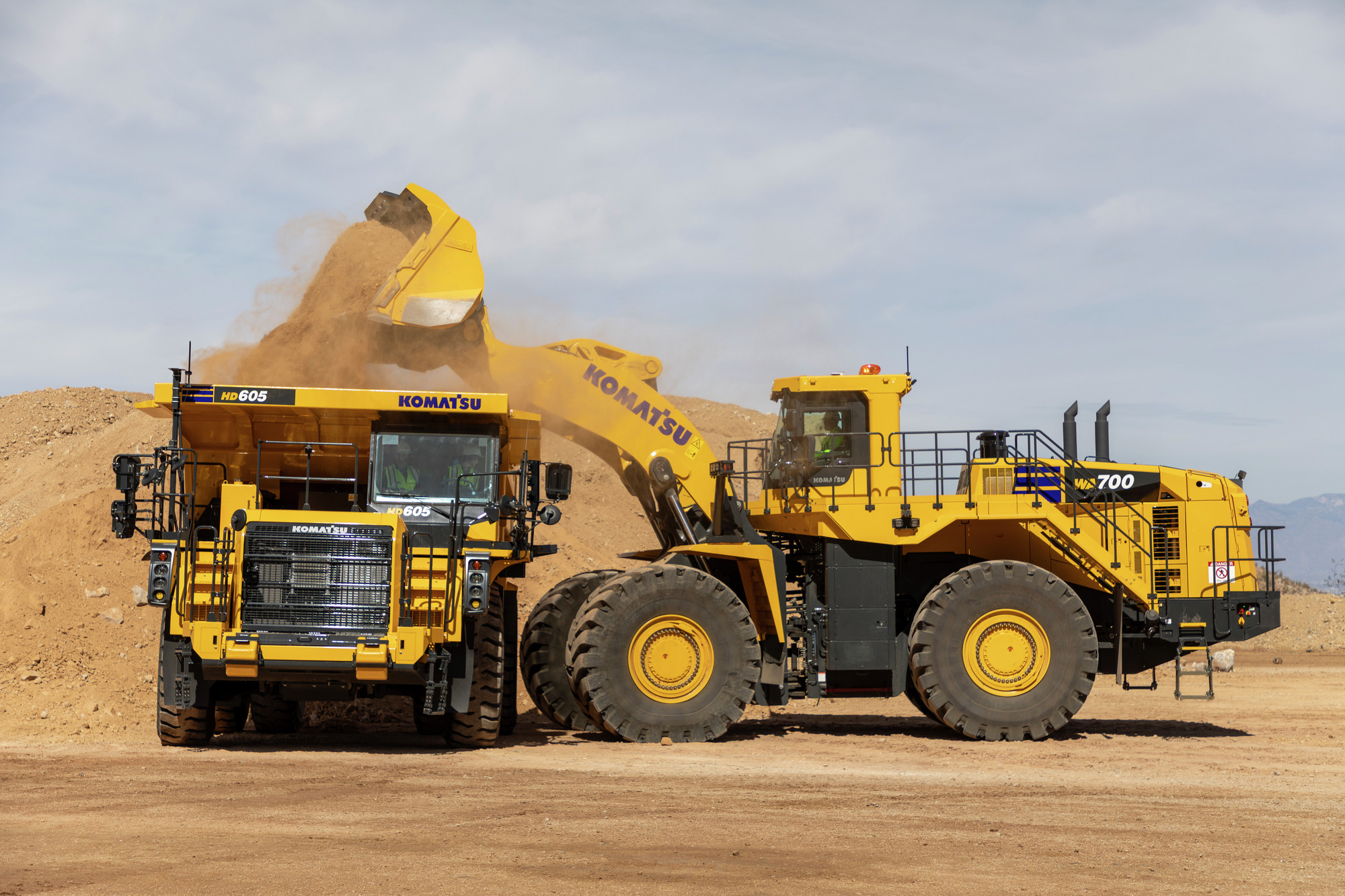
In the world of heavy equipment, some machines don???t just move material ??? they move people. They earn loyalty. They become legends.
The Komatsu WA700 is one such machine. First introduced decades ago, it quickly found its place in large-scale quarries and mines around the globe. With its perfect blend of raw power, manageable size, and operator-friendly features, it became a favorite ??? until it quietly disappeared from Komatsu???s production line.
Now, after years of silence, the WA700 is back ??? reborn as the Komatsu WA700-8. Not just a reissue, but a full evolution. With cleaner power, smarter systems, and enhanced productivity, it is positioned to dominate the modern job site once again.
Perfectly Positioned: Between WA600 and WA800
In Komatsu’s large loader lineup, three names dominate the conversation:
WA600-8 ??? economical, versatile, and ideal for mid-size operations
WA800-8 ??? massive, powerful, and built for ultra-heavy mining
WA700-8 ??? the ideal balance between the two
Where the WA600 can feel underpowered for larger haul trucks, and the WA800 may be too large or costly for tighter sites, the WA700-8 offers a golden middle ground.
| Model | Net Horsepower | Operating Weight | Bucket Capacity | Tipping Load |
|---|---|---|---|---|
| WA600-8 | 529 HP | ~56 tonnes | 6.4 ??? 7.8 m?? | ~36 t |
| WA700-8 | 773 HP | ~97 tonnes | 9.2 ??? 10.3 m?? | ~68 t |
| WA800-8 | 854 HP | ~115 tonnes | 11.5 m?? | ~75+ t |
The WA700-8 is built for fast, efficient loading of 70-100 ton trucks in as little as four passes ??? with better fuel economy and agility than the WA800, and more loading capacity than the WA600. For many fleet managers and mine operators, it’s the ???just right??? loader.
WA700-8 vs WA700-3: A Giant Leap Forward
Many operators still rely on the older WA700-3, a proven machine with years of dependable service in the field. But the industry has moved forward ??? and Komatsu???s new WA700-8 represents a massive upgrade in every category that matters.
Here???s how the new WA700-8 compares to its legendary predecessor:
| Feature | WA700-3 | WA700-8 | Improvement |
|---|---|---|---|
| Net Power | 636 HP (474 kW) | 773 HP (578 kW) | +21% Power |
| Emissions Standard | Tier 2 | Stage V / Tier 4 Final | Cleaner, eco-friendly operation |
| Torque | ~2900 Nm | ~3300+ Nm | More torque at lower RPM |
| Bucket Capacity | 8.5 m?? | 9.2 ??? 10.3 m?? | Up to 20% more material |
| Operating Weight | ~90 tonnes | ~97 tonnes | Enhanced stability |
| Fuel Consumption | High at full load | Up to 8% more fuel-efficient | Lower running costs |
| Operator Cab | Analog, basic comfort | Modern, digital, climate control | Reduced fatigue, better visibility |
| Payload Monitoring | Manual estimation | Intelligent Load-Pilot system | More accurate and faster loading |
| Diagnostics | None | KOMTRAX telematics | Remote monitoring and predictive maintenance |
| Maintenance Access | Complex | Easier filter/service access | Shorter downtimes |
| Brake System | Standard | Oil-cooled disc brakes | Higher durability in extreme conditions |
Why the WA700-8 Matters Now
In today???s mining and construction industries, efficiency and ROI are everything. Machine owners need:
More material moved per shift
Less downtime
Lower operating costs
Smaller environmental impact
Happier, safer operators
The WA700-8 delivers all of these ??? with the legendary reliability Komatsu is known for.
It brings the same muscular performance of the WA700-3, but wrapped in a smarter, cleaner, and more comfortable package.
A Comeback Worth Celebrating
The return of the WA700-8 isn???t just about nostalgia ??? it???s about filling a critical operational gap. It???s the machine you choose when the WA600 isn???t enough, but the WA800 is too much. When you want more productivity, without compromising mobility or budget.
This is a loader that fits the modern fleet ??? strong enough for the heavy loads, yet agile and efficient enough for tighter, faster-paced operations.
Komatsu has brought the WA700 back to life ??? not as a tribute to the past, but as a bold step toward the future.
If you ever ran a WA700-3, you already know the feeling: confidence, control, and power at your fingertips.
Now imagine that ??? but upgraded in every way.
WA700-8. The legend continues.
The Silent Story of Machines How Smart Maintenance Saves Millions in Mining
When Oil Speaks, You Listen
In the heart of the mine ??? where steel meets stone and machines never sleep ??? the only thing standing between productivity and disaster is often just a few liters of oil.
This oil, dark and seemingly dirty, is not just a waste product. It???s a diagnostic report, a storyteller, a witness to everything that???s happening inside your engine, transmission, or hydraulic system.
Just like a blood test in humans, a lab oil analysis gives us a peek into the internal health of a machine ??? without opening it up. A simple sample can tell whether a bearing is failing, a piston is scratching, or coolant is leaking.
Hidden Messages in a Few Drops
A quality oil analysis uncovers metal particles, fuel dilution, coolant leaks, or dirt contamination. These are early warning signs that allow action before catastrophic damage.
Here???s what you can learn from the elements found in used oil:
| Element | Possible Cause |
|---|---|
| Iron (Fe) | Gear, crankshaft, or cylinder liner wear |
| Copper (Cu) | Wear from bearings or oil coolers |
| Aluminum (Al) | Piston skirt or bearing wear |
| Chromium (Cr) | Ring or valve seat wear |
| Silicon (Si) | Dust ingress through air filters |
| Lead (Pb) & Tin (Sn) | Babbitt bearing wear |
| Coolant (glycol) | Leaking head gasket or cracked liner |
| Water or Fuel | Internal leaks or poor combustion |
Each of these can be detected long before the machine shows signs of failure.
Prevention is the Smartest Investment
Let???s say you???re running a Komatsu WA600 loader and the lab detects elevated levels of chromium. That may suggest ring wear. Addressing this early might only require a minor rebuild. Ignore it, and the engine could seize. The cost difference? Tens of thousands of dollars.
Oil analysis costs less than $100. A new engine? Often over $50,000.
Smart CEOs Use Oil as a Decision-Making Tool
Forward-thinking mining companies don???t wait for failures. They monitor, measure, and manage proactively. The oil speaks. The smart listen.
The Golden Hours of Maintenance
In mining, time isn???t just money ??? it???s millions. An unexpected breakdown of a dozer, excavator, or haul truck can halt an entire operation.
That???s why timing is everything. Service too late ??? and you???ll pay the price in breakdowns. Service too early ??? and you waste resources. The key? Smart, condition-based maintenance.
Every Component Has Its Own Clock
Here???s a general guideline based on global OEM standards, with field-tested adjustments for tough mining conditions:
| Component | Standard Service Interval | Notes |
|---|---|---|
| Engine oil | 250???500 hours | Adjust for load and oil quality |
| Oil filter | With every oil change | Never reuse old filters |
| Transmission oil | 1,000 hours | Backed by oil analysis |
| Fuel filters | 250???500 hours | Shorter if fuel quality is poor |
| Air filters | Variable | Depends on dust and environment |
| Hydraulic oil | 1,000???2,000 hours | Analyze before draining |
Digital Maintenance Planning = Competitive Advantage
With modern CMMS (Computerized Maintenance Management Systems), businesses can:
Set real-time service alerts
Track costs per machine
Analyze repair trends and forecast needs
Pairing digital records with oil analysis creates a predictive system that reduces downtime, cost, and stress.
In Maintenance, Minutes Matter
A successful CEO doesn???t think in parts ??? they think in profit per hour. And every minute of smart servicing adds hours of uptime and thousands in retained value.
Filters ??? The Silent Guardians of Heavy Iron
Filters are often overlooked ??? until they fail.
Whether it???s an oil filter, fuel filter, or hydraulic strainer, these components act like the kidneys and liver of a machine. They quietly protect critical systems from dust, sludge, and debris.
But when neglected or replaced with cheap knockoffs, filters become the silent killers of mining equipment.
Types of Filters and Their Roles
| Filter Type | Main Role | Risk of Failure |
|---|---|---|
| Oil Filter | Captures wear particles & sludge | Increased engine wear |
| Fuel Filter | Removes impurities in fuel | Injector damage, engine misfire |
| Air Filter | Stops dust from entering engine | Abrasive cylinder wear |
| Hydraulic Filter | Protects pumps & valves | Hydraulic system failure |
OEM vs. Aftermarket: The Filter Dilemma
OEM (Original Equipment Manufacturer) filters are engineered to exact specifications. Their materials, seal quality, and filtration ratings are tested extensively.
Some premium aftermarket filters ??? like Donaldson, Baldwin, or Fleetguard ??? meet or exceed OEM standards.
But beware: many cheap aftermarket filters allow up to 30% more contaminants to pass. And in dusty mining conditions, even a tiny particle can scratch a $20,000 cylinder.
False Economy Hurts the Most
Saving $50 on a filter and losing $15,000 on an engine rebuild isn???t smart business. Great CEOs know: Quality filters are an investment in uptime.
Oil Quality ??? Liquid Armor or Hidden Danger?
At a glance, all oil looks the same. But what matters is what???s inside ??? the base stock, additives, thermal stability, and viscosity index.
Using poor-quality oil is like filling a jet engine with cooking oil. It may run for a while, but it???s a ticking time bomb.
What Makes Oil ???Good????
A high-quality oil must:
Withstand high temperatures without oxidizing
Maintain its viscosity under stress
Suspend contaminants for filter removal
Protect against rust and acid
Perform in cold starts and extreme loads
Classification Matters
Always check the specifications:
API Rating (e.g., CK-4, CI-4 Plus)
OEM Approvals (e.g., CAT TO-4, Komatsu KES)
ACEA Ratings (for European systems)
Higher classifications mean better protection and longer life.
Trusted Brands in Harsh Mining Conditions
Some of the most trusted lubricant brands in the mining and heavy construction world include:
??? Caterpillar DEO-ULS & HYDO Advanced
??? Komatsu Genuine Oil (KGO)
??? Volvo VDS & Hydraulic Oil 98611
??? Hydrex??? by Petro-Canada
??? ExxonMobil Mobilfluid 424 / Mobiltrans HD
??? Hitachi Genuine Fluids
??? Chevron Rando HDZ & Clarity
These oils are specifically engineered to meet the extreme temperature, load, and contamination conditions of off-road machinery.
What to Avoid
Oils with no label or generic markings
Repackaged or counterfeit lubricants
Brands with no technical data sheet (TDS) or certification
Bad oil burns faster, forms sludge, and loses viscosity ??? damaging every moving part.
Final Words ??? Smart CEOs Let Their Machines Speak
Heavy equipment in mining isn???t just machinery. It???s capital. It???s production. It???s your reputation.
The difference between running a profitable mine and one plagued with downtime often comes down to how you manage maintenance.
Good companies react to failure.
Great companies prevent it.
Invest in:
Regular oil analysis
Predictive maintenance software
OEM or trusted aftermarket filters
Certified high-grade oils
Trained technicians with the right tools
Because in this business, every hour counts ??? and every breakdown costs.
Conclusion: Let the Data Drive You
Oil analysis: $100
Early repair: $500
Engine rebuild avoided: $50,000
Knowing before failing: Priceless
Komatsu R-Series Excavators: The Compromise Beneath the Steel

Not all machines wearing the Komatsu badge are created equal. In the shadows of legendary models like the PC200 and PC300, the ???R-Series??? quietly moves earth across job sites in Southeast Asia. But what exactly are these machines? And why do they remain largely absent from Western markets? This is a story about cost, compromise, and a letter that stands for more than just a model variant.
The Rise of the R: Why Komatsu Created the R-Series
In the early 2000s, as developing markets across Asia exploded with demand for construction equipment, global brands like Komatsu faced a challenge: how to serve price-sensitive markets without undermining their premium brand image or manufacturing costs?
Enter the R-Series ??? machines like the PC200-8R or PC400-8R ??? built not in Japan, but in Komatsu???s regional factories in China or Indonesia,, designed specifically for customers who needed something more affordable than the original Japanese models.
At first glance, these machines look like their globally recognized siblings. But beneath the yellow paint and familiar decals, they tell a different story.
What Makes an R??? an R?
The R-Series is not just a label ??? it???s a declaration of a different design philosophy. While standard Komatsu models prioritize performance, durability, and innovation, R-Series machines emphasize affordability and localization.
Key characteristics:
Simpler hydraulic systems
Engines compliant with Stage II / III emissions only
Reduced electronic complexity
Lower-grade materials used in some internal components
Built with local supply chains in mind ??? often using regionally sourced parts
To a casual buyer, the R may seem like a budget-friendly deal. But seasoned fleet managers know better: when the purchase price goes down, something else always pays the price.
Under the Hood: The Technical Weaknesses of R-Series Excavators
Engines That Sometimes Belong to a Past Era
Not all Komatsu R-Series machines are created with outdated engine technology ??? but many are. While certain newer models, especially compact excavators like the PC20R?5, are equipped with Stage V compliant engines for limited export to regions with stricter regulations, the majority of R-Series machines ??? particularly in larger classes like the PC200R or PC400R ??? still rely on Stage II or IIIA engines.
These engines are:
Less fuel-efficient
Higher in emissions
Lacking in electronic control systems (like DPF or SCR)
Designed primarily for markets with relaxed environmental standards, such as parts of Asia, Africa, and Latin America
This engine configuration allows Komatsu to keep costs down and simplify maintenance in remote job sites. However, it also means:
The machines cannot legally operate in countries like the U.S., Canada, or EU nations
Fuel consumption and operational noise are typically higher
Long-term ownership costs may increase due to older mechanical systems
It???s important to understand that while the R-Series has evolved over time, engine technology remains one of its most polarizing aspects. In regions where emissions and noise levels are tightly controlled, these machines are not even an option ??? and in other regions, they???re often chosen for price, not performance.
Weaker Hydraulic Precision and Response
Operators have reported a noticeable difference in control response. Compared to original PC200s:
Joystick input feels sluggish
Flow control is less precise, especially in fine grading or trenching
Hydraulic pump components wear out faster under load
This might not matter much on a rice field in Laos, but in a busy mining site or urban project? It???s the difference between profit and breakdown.
Lower Durability: Cheaper Doesn???t Mean Cheaper Over Time
To hit lower price points, Komatsu and its regional partners make compromises:
Undercarriages use thinner metals and lighter welds
Pins, bushings, hoses and cylinders wear prematurely
Paint quality and corrosion resistance is inferior
Mechanics in Vietnam and India frequently mention early bushing failures, hydraulic leaks, and electrical faults ??? especially after the 3,000-hour mark.
Difficult Spare Part Support
Though the R-Series is ???Komatsu,??? part numbers often differ. In markets outside Asia:
Finding parts becomes harder
Compatibility is uncertain
Some parts are locally produced copies, not global OEMs
Even authorized dealers may struggle with lookup and sourcing ??? especially when the serial number doesn’t match global systems.
Not Welcome in the West: Why R-Series Machines Are Absent from the U.S. and EU
There???s a reason you won???t see a PC200R-8 on a job site in California or Germany.
Regulatory Compliance
Emissions, safety, and electronic controls in R-Series do not meet the standards set by EPA or CE certification.
Brand Image Protection
Komatsu fiercely protects its reputation in developed markets. Offering a lower-tier machine risks devaluing its premium standing against competitors like Caterpillar, Volvo, or John Deere.
Warranty and Service Concerns
Global dealers often refuse to honor warranties for R-Series machines imported as gray-market units. It???s simply not worth the risk ??? neither for Komatsu nor the customer.
What Users Are Saying: Real-World Feedback from Operators
From Reddit to heavy equipment forums, the verdict on R-Series is mixed:
“I bought a PC200R in Laos. Price was good, but within 2,500 hours we had to replace the entire swing motor and half the hoses were leaking.”
??? Contractor, Southeast Asia
“They???re OK for light work. Don???t expect a Komatsu made in Japan though.”
??? Mechanic, Philippines
“We imported an R-Series to Sudan, thinking it was a smart move. But sourcing parts became a nightmare. We had to fabricate bushings locally.”
??? Dealer, MENA region
Conclusion: Is the R Worth the Risk?
If you’re operating in a region where labor is cheap, regulations are loose, and downtime isn’t catastrophic ??? then an R-Series Komatsu might do the job.
But if you’re counting on:
Consistent uptime
Parts availability
High resale value
Fuel efficiency
Long service intervals
??? then these machines could cost you more in the long run than they save at the dealership.
Final Words
The R-Series is a response to market demand, not a representation of Komatsu’s full potential. It???s a compromise ??? and like all compromises, it comes with trade-offs. Know what you’re buying, where it comes from, and what it lacks.
Because sometimes, the letter ???R??? doesn’t stand for “Robust”.
It stands for ???Risk???.
Legends of the Loaders: A Generational Tale of the Komatsu WA600, CAT 988, and Volvo L350
Back in the dusty mining pits of the late 1980s, three giants began carving their names into the earth Komatsu, Caterpillar, and Volvo. Each had a different philosophy, a different rhythm, and a different vision of what a wheel loader should be.
This isn???t just a comparison of numbers and specs. It???s the story of how three machines evolved, aged, and adapted over nearly four decades. From roaring mechanical beasts of the ???80s to the smart, fuel-efficient titans of today, the WA600, 988, and L350 have all traveled a long road???and we???re here to tell that story.

The Iron Age ??? The 1986 Originals
A year of Walkman’s, diesel fumes, and machines built to last a lifetime.
Komatsu unveiled the WA600-1, a bold, muscular loader with almost no electronics and an engine that could pull the earth backwards if needed.
Caterpillar was pushing the 988B/C series, sturdy and dependable, with its legendary mechanical reliability.
Volvo, still shaping its identity in the large loader class, fielded the early L330/L360 series???precursors to what would eventually become the L350 line.
These machines were built not for comfort, but for war. No touchscreen. No hybrid systems. Just raw power, thick steel, and enough torque to make the ground tremble.
Aftermarket & OEM in Today???s World:
Today, these legends still roam the yards of Africa, the Middle East, and rural America. But keeping them alive takes work:
Caterpillar 988B/C: Still king in aftermarket. Brands like CTP, IPD, and FP Diesel keep parts in circulation. Even Cat dealerships can still supply many core components.
Komatsu WA600-1: Some parts available through Japan-based surplus dealers and aftermarket specialists like KMP or H&B. But others? Out of print.
Volvo L330/360: A challenge. OEM support is almost gone, and aftermarket parts are scarce or overpriced. Most owners rely on salvage units or custom machining.
The Evolution (1995???2005) ??? From Muscle to Mind
As the new millennium approached, something shifted. Mining and quarrying companies wanted more than brute strength???they wanted efficiency, comfort, and cleaner emissions.
Komatsu WA600-3 and WA600-6 entered the scene with better hydraulics, improved visibility, and optional ride control.
Caterpillar launched the 988F and later the 988G, integrating load-sensing hydraulics, better cab ergonomics, and the first generation of what we now call “smart machines.”
Volvo answered with the L330D, then the L350F, refining their loader into a powerful yet refined beast, loved especially in Europe for its smooth controls and fuel economy.
This generation of machines struck a balance between old-school durability and new-era operator comfort. And even today, used WA600-6 loaders, CAT 988G for sale, and Volvo L350F units are in high demand on the used equipment market.
Parts & Maintenance in This Era
CAT 988G/F: Still very strong in parts availability. Many owners rely on high-quality aftermarket brands like CTP or Berco for undercarriage and engine kits.
Komatsu WA600-3/6: Good availability of critical components, especially engine parts. Electronics, however, can be tricky and expensive.
Volvo L350F: Reliable in operation, but parts prices tend to be higher. Volvo’s own network supplies most OEM parts, though aftermarket options are growing, especially in Europe.
The Smart Machines (2006???Today)
We are now in the age of intelligence. Machines are no longer just tools???they’re connected assets with diagnostics, telematics, and emissions systems smart enough to call the mechanic before the driver notices a problem.
The Komatsu WA600-8 arrived with Tier 4 Final emissions, Komtrax telematics, and adjustable power modes for fuel savings.
The CAT 988K brought joystick steering, Product Link remote monitoring, and even hybrid variants for fuel-sensitive operations.
Volvo L350H, with its OptiShift system, ultra-quiet cab, and Eco mode, is arguably the most operator-friendly loader in the class.
These modern giants are expensive but incredibly efficient???ideal for contractors who want reliability with fewer operators and lower fuel bills.
?? Spare Parts and Ownership Cost
Caterpillar 988K: Still the benchmark. OEM parts available globally. Resale value is strong. Aftermarket support is vast and affordable.
Komatsu WA600-8: OEM support is solid through authorized dealers. Aftermarket is growing, though some advanced electronic parts remain exclusive.
Volvo L350H: High comfort, but higher long-term cost due to parts pricing and lower aftermarket coverage. However, fuel savings offset this over time.
The Parts Puzzle ??? OEM vs Aftermarket
When it comes to keeping these giants alive, parts availability is just as important as horsepower.
Caterpillar has the strongest global network. Many aftermarket brands like CTP, IPD, and Bulldog offer high-quality alternatives at better prices. Even for 988B models, parts are still being reproduced.
Komatsu‘s WA600 parts are well-supported by OEM and aftermarket alike???especially brands like KMP, H&B, and OEM surplus dealers in Japan and the UAE.
Volvo L350 parts can be a challenge. OEM parts are reliable, but expensive. Some aftermarket suppliers like VMR or CVA exist, but coverage is patchy.
Also note:
CAT often supports parts for 20+ years after production ends.
Komatsu generally supports 12???15 years.
Volvo???s parts support tapers after 10???12 years unless the machine is still in active production.
Verdict of the Yard ??? Which Loader Is Right for You?
So, which legend wins?
Choose the CAT 988 if you want rock-solid parts support, a trusted resale value, and strong aftermarket flexibility. Great for contractors in Africa, UAE, and the Americas.
Choose the Komatsu WA600 if you???re looking for a balance between durability and technology???especially if you???re sourcing parts from Asia or the Gulf region.
Choose the Volvo L350 if comfort and operator productivity are your top priorities, and you???re prepared for a slightly higher parts bill.
Final Thoughts
From the WA600???s raw beginnings to the L350H???s sophisticated comfort, these loaders each tell a story of engineering evolution. Whether you’re restoring a 1986 Komatsu WA600-1, running a CAT 988K fleet, or investing in a used Volvo L350H, the key is knowing the history???and the hidden costs.
Want help finding parts or sourcing used machines? Get in touch. We specialize in heavy equipment solutions for real-world jobs.